

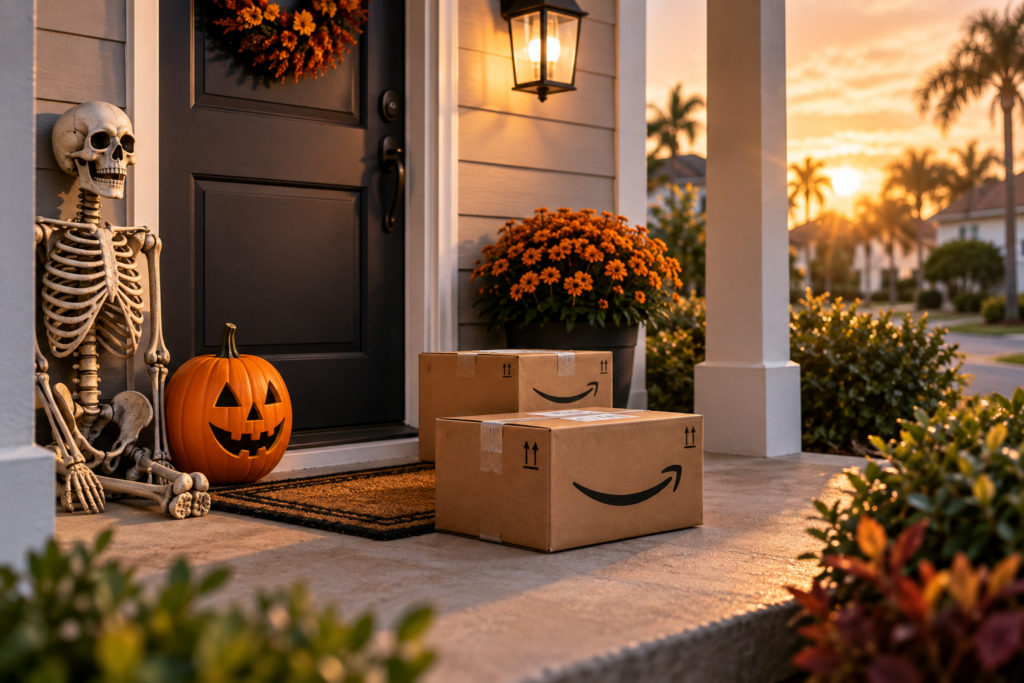
Online shopping gives us more choices than ever. Somehow, where the package goes became the choice we stopped making.
There is a peculiar question buried inside almost every online purchase.
Where should we send it?
Except most of the time, nobody really asks.
The answer is already sitting there.
Your name, street, city and ZIP code, neatly stored beneath two words that seem completely harmless:
Default address.
You might spend twenty minutes deciding what to buy. You compare models, read reviews from strangers, search for a coupon code and decide whether getting it Tuesday instead of Thursday is worth another twelve dollars. At checkout, you might even switch credit cards because one gets better points.
Then comes the decision that determines where the thing you just bought will physically end up.
The website has already made it for you.
Home.
Usually that’s exactly right.
What’s interesting is how rarely we ask whether it is.
The most powerful choice may be the one you don't make
Behavioral researchers have been interested in defaults for decades because people have a remarkable tendency to stick with whatever option has already been selected for them.
It’s called the default effect, and it has been studied in decisions far more consequential than online shopping, including retirement savings, insurance, organ donation and privacy settings.
The principle is surprisingly simple. When one choice requires no action and another requires us to stop and do something, doing nothing has an advantage.
Which makes Default Address more interesting than it looks.
Once your home is saved in an account, sending something there requires almost no thought. Choosing somewhere else means interrupting checkout, finding another address or entering one, and making a decision you probably weren’t planning to make.
So most of the time, we don’t.
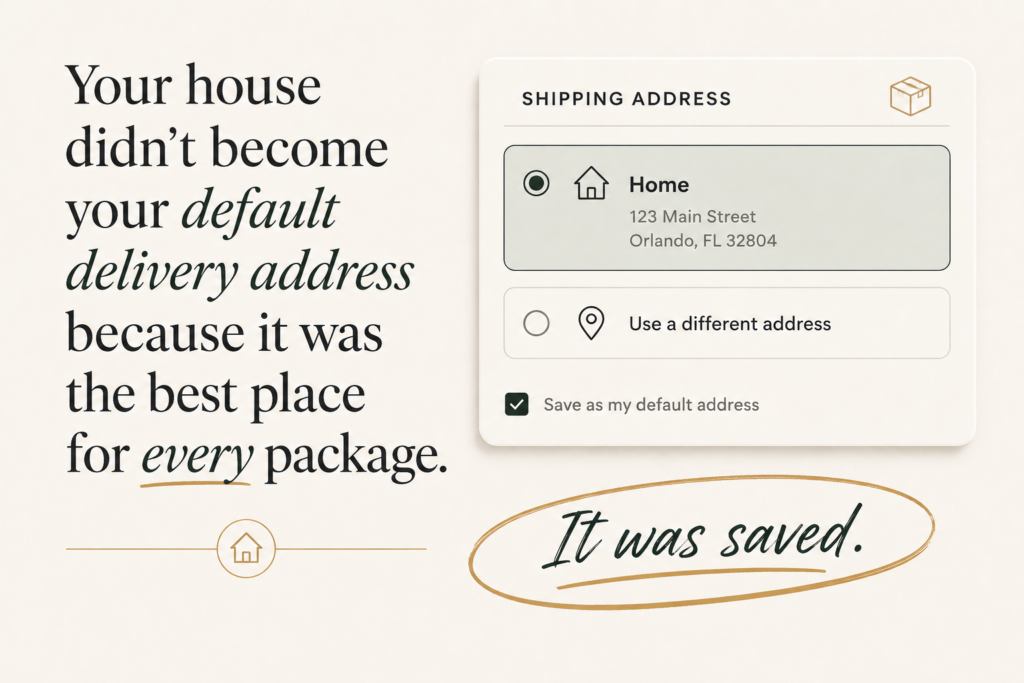
Somewhere along the way, "shipping address" became singular
This is especially strange because we’ve become comfortable having multiple destinations for almost everything else.
Our phones hold several credit cards, and we choose among them depending on what we’re buying. We have personal email addresses and work email addresses. Files might live on a computer, in the cloud or on a phone. Business owners routinely separate personal and business banking, phone numbers and addresses because different parts of life have different needs.
We don’t find any of this confusing.
Yet ask someone for their shipping address, singular, and most of us immediately give the place where we sleep.
Living somewhere and receiving something became almost interchangeable ideas.
They don’t necessarily have to be.
An address can simply be a destination.
And once you think about it that way, the question at checkout changes.
Not Where do I live?
Where should this go?
The delivery industry seems to be asking the same question
The front door is hardly disappearing from modern delivery. But it is increasingly being joined by other options.
Carrier locations, parcel lockers, retail pickup points and other out-of-home destinations have become part of the delivery landscape, and shoppers are using them.
DHL’s 2025 global shopper research found that one in four shoppers had purchases delivered directly to an out-of-home location. Its 2026 research found that figure approaching three in ten, with nearly four in ten shoppers saying they wanted the ability to redirect deliveries to one.
That’s an interesting shift because the attraction isn’t necessarily that these places are closer than home.
Often, they aren’t.
What they offer is another kind of convenience: control over the destination.
The industry that spent decades getting extraordinarily good at bringing things to our houses is increasingly giving us ways to say, Actually, bring this one somewhere else.
FedEx offers hold-at-location options for eligible shipments. UPS has Access Point locations. Amazon has lockers and pickup points. Depending on the circumstances, a workplace, neighbor or local receiving address can serve the same basic purpose.
None of these needs to become the place where everything goes.
Having another option is useful precisely because it is an option.
The empty house is what makes this interesting
This is the part I keep coming back to.
When we say home delivery, the phrase creates a comforting little picture. The package comes home to us.
Except quite often, we’re not there.
We’re at work. We’re picking up a child. We’re at dinner. We’re traveling. We’re sitting in traffic while a notification tells us that something has been successfully delivered to a place where nobody currently is.
Technically, the package has reached its destination.
Practically, the transaction isn’t quite finished.
This is where our obsession with speed gets interesting. Online retailers have competed to shave days, then hours, from delivery times. We can pay extra to have something arrive tomorrow instead of Wednesday.
But if tomorrow’s delivery arrives at 11:14 a.m. and we don’t walk through the door until 6:30 p.m., what exactly did those seven hours buy us?
Perhaps the next evolution in convenience isn’t simply getting things to us faster.
It’s getting them to the place that makes the most sense.
The Orlando Weeks When Your House Sits Empty
This is the part I keep coming back to.
When we say home delivery, the phrase creates a comforting little picture. The package comes home to us.
Except quite often, we’re not there.
We’re at work. We’re picking up a child. We’re at dinner. We’re traveling. We’re sitting in traffic while a notification tells us that something has been successfully delivered to a place where nobody currently is.
Technically, the package has reached its destination.
Practically, the transaction isn’t quite finished.
This is where our obsession with speed gets interesting. Online retailers have competed to shave days, then hours, from delivery times. We can pay extra to have something arrive tomorrow instead of Wednesday.
But if tomorrow’s delivery arrives at 11:14 a.m. and we don’t walk through the door until 6:30 p.m., what exactly did those seven hours buy us?
Perhaps the next evolution in convenience isn’t simply getting things to us faster.
It’s getting them to the place that makes the most sense.
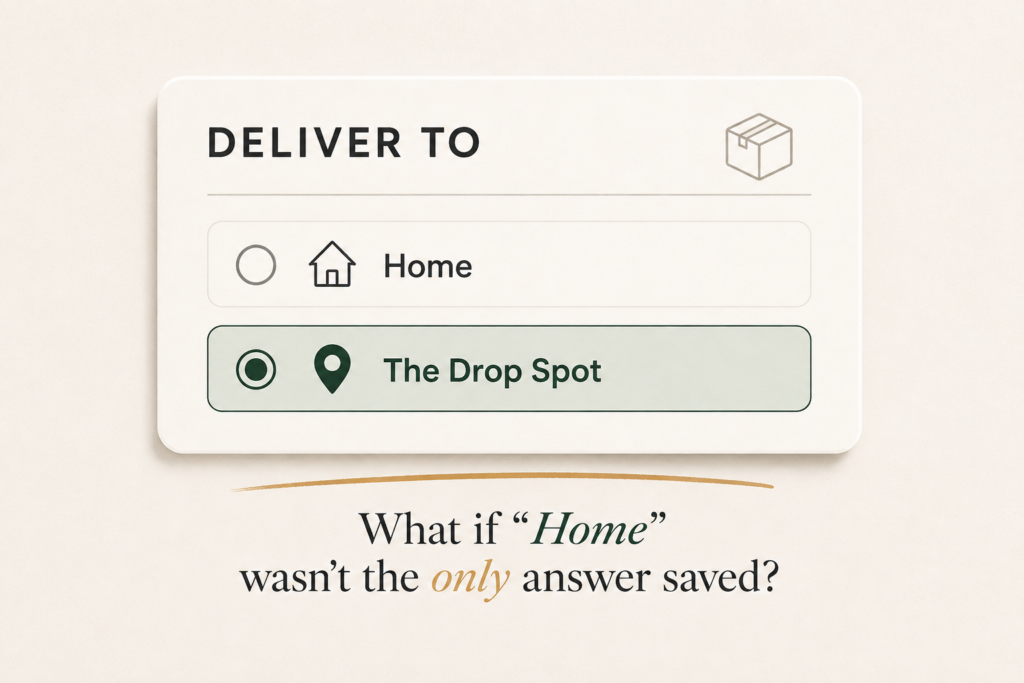
A second address changes a very small thing
This is what I find interesting about having another delivery address.
It doesn’t require abandoning home delivery or developing an elaborate system for online shopping.
You save another address.
That’s all.
And suddenly, the next time you’re checking out, Home isn’t an instruction.
It’s one of the choices.
That small distinction is the idea behind The Drop Spot at Ship Orlando. It gives you a local Orlando address you can keep alongside your home address and use when that’s where you’d rather have an order go. We receive the delivery inside, and it stays here until you’re ready for it.
The important part isn’t using it every time.
It’s not having to invent an alternative when you need one.
Because perhaps the habit worth changing isn’t where we send all our packages.
It’s the assumption that there was never a decision to make in the first place.
For years, checkout has remembered where we live.
Maybe it’s time we gave it somewhere else to remember.
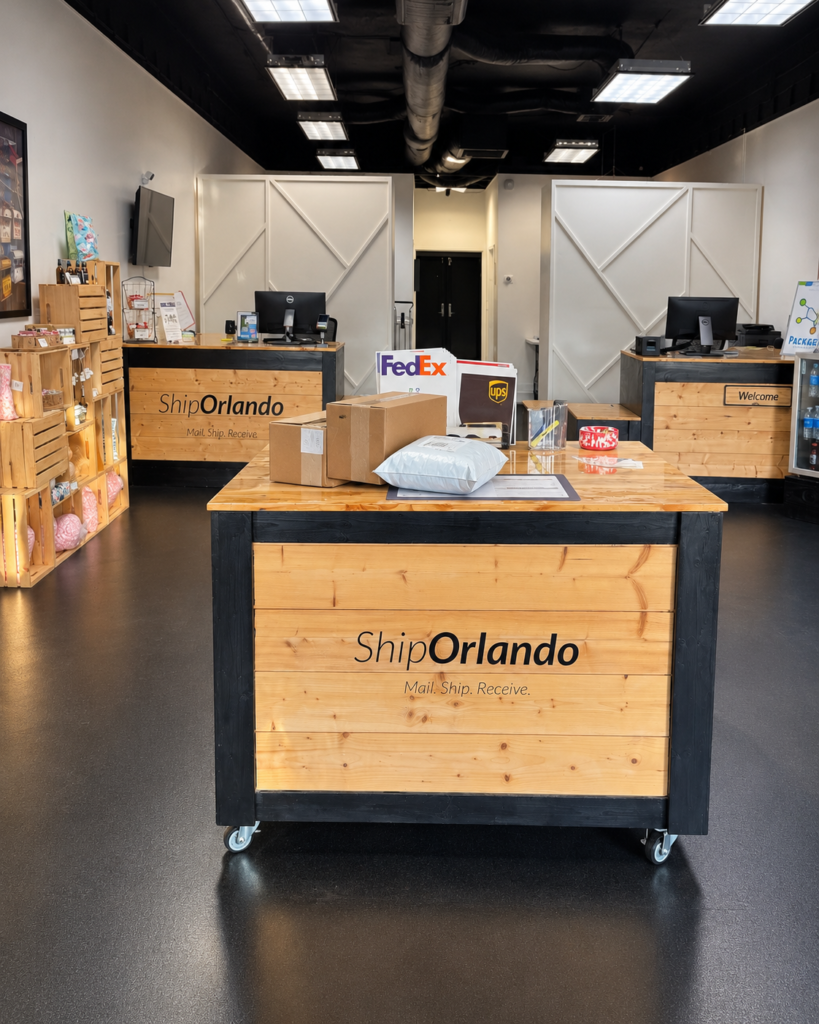
Inside instead of outside.
Your package arrives. We receive it. You get notified. You pick it up when it works for you.
Save Ship Orlando as a second delivery address.
Add Ship Orlando, 3019 Edgewater Dr., Orlando, FL 32804 as a saved delivery address, then choose it at checkout when you’d rather not have a package sitting at home.
Set up your Drop Spot address →
And if you’re thinking, “Maybe I need more than package receiving,” that’s where the mailbox conversation starts. Here’s a quick read: PO Box vs. Private vs. Virtual Mailbox: Why Most People Pick Wrong?
Because not everything belongs on your porch. Some things just need a better address.
This post is for general information only. Delivery, signature, and medication shipping policies vary by retailer and carrier, so check with the sender for specifics on your order.
